How to fill an IT contract role faster
Where the days go between a client brief and a signed contractor, and what shortens each stage.
For agenciesPublished on 8 min read
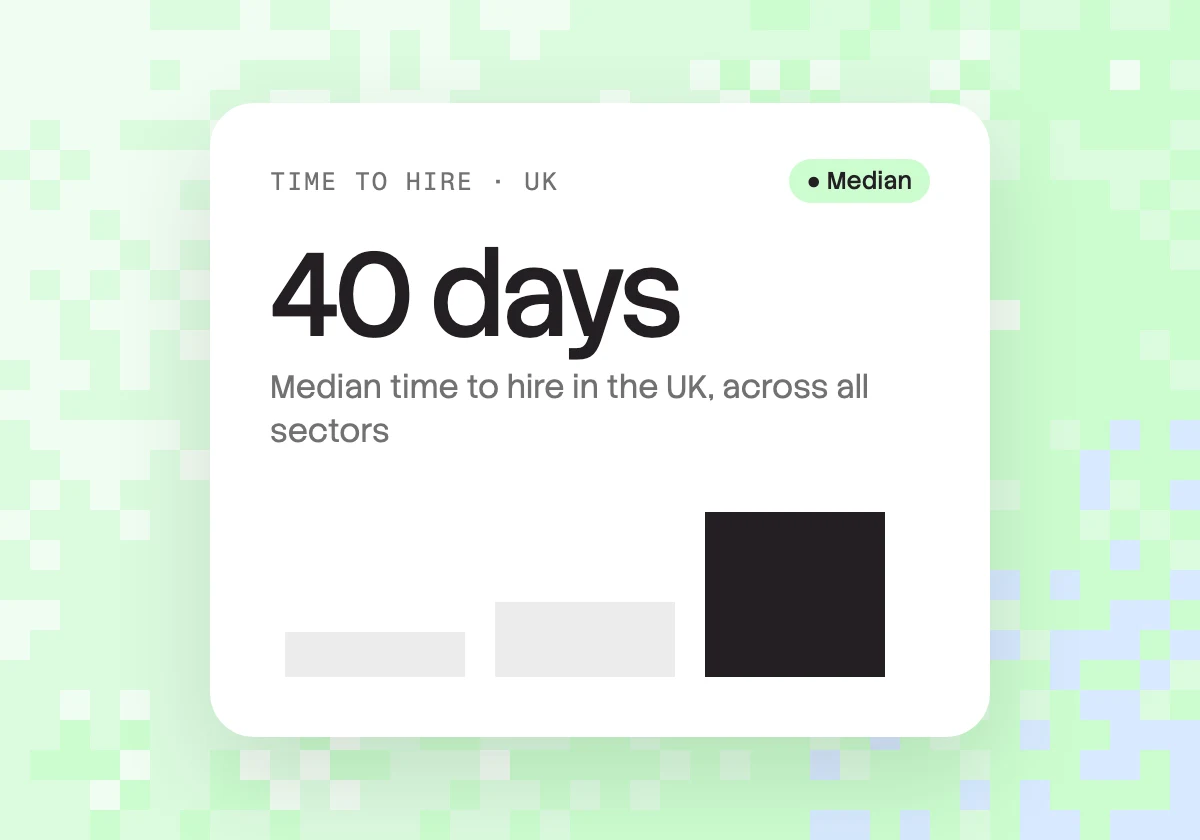
To fill an IT contract role faster, cut the waiting, not the checking: start from consultants who are already available and vouched for, fix the brief and the interview slots on day one, and run compliance checks alongside the search. For scale, the median UK hire takes 40 days, and technology hiring worldwide takes a median of 48 (SmartRecruiters, data to August 2024). A contract search can close far sooner, but the days go to the same places: finding people who are not looking, waiting for replies and decisions, and re-checking what nobody vouches for. In contingency recruitment second place earns nothing, so each of those days is part of the fee.
How long does it take to fill an IT contract role in the UK?
The best current benchmark comes from SmartRecruiters, which analysed 89 million applications for 1.5 million jobs in 95 countries, from September 2023 to August 2024 (Recruiting Benchmarks 2025). The median UK hire took 40 days, against 38 worldwide. Technology was one of the slowest industries, at a median of 48 days worldwide, 26% longer than the global figure. The data does not separate contract from permanent roles.
Split the UK median into its stages and the shape is clear: applications reviewed by day 7, the first interview by day 15, the hire by day 40. More of the time sits after the first interview than before it.

No current public dataset splits UK time to fill between contract and permanent roles (checked October 2026). Contract roles should still move faster, for three reasons:
- There is less to assess. The client is buying a skill for a fixed period, not a career.
- The budget usually exists already. It comes with the project, so fewer people need to sign off.
- The person can start soon. An available contractor, or a consultant between projects, can start within days of saying yes.
When a contract search takes as long as a permanent one, the delay is in the process. And demand is rising: the REC's index of demand for IT contractors reached 52.7 in August 2026, its highest reading since April 2023 (above 50 means growth; REC figures reported by ContractorUK, 25 September 2026).
Where does the time go, stage by stage?
Six stages, what each involves and what usually slows it. No durations: they vary too much by role and client to be honest.
| Stage | What it involves | What usually slows it |
|---|---|---|
| 1. Brief | The call with the client: skills, rate, start date, length, IR35 status | A long list of "essentials", no agreed rate, unclear who decides |
| 2. Sourcing | Your database, job boards, LinkedIn, referrals, suppliers | The best-fit people are not looking, and every agency searches the same pool |
| 3. Outreach and replies | Calls and messages to check interest, availability and rate | Waiting for replies; candidates already in other processes |
| 4. Screening and submission | Skills check, references, the profile sent to the client | Re-checking claims that nobody vouches for |
| 5. Client interview | Booking, technical test, feedback | Diaries, extra rounds, slow feedback |
| 6. Offer, terms and compliance | Rate, contract, right to work, references, clearance | Checks that only start after the offer; supplier paperwork |
A recruiter controls stages 2 and 3 most. Stages 5 and 6 belong to the client, but their time can be booked before the search starts, and on the medians above that back half is the longest stretch.
Why does second place earn nothing in contingency recruitment?
On a contingency role, the agency is paid only when its candidate starts. The client often briefs more than one agency, and the first strong profile in front of the hiring manager sets the bar. A slightly better profile that arrives two days later can meet a shortlist that is already closed. The calls, the screening and the reference checks of the agency that came second are unpaid.
That is the model, not a flaw in the people who work in it, and good contract recruiters race the clock on every role. Sending more CVs, faster, costs credibility with the client. The answer is to start each search closer to the finish line.
Six ways to shorten each stage
- Write the brief as three must-haves. Agree with the client which three skills are non-negotiable, what can be learned on the job, the day rate range, the start date and the IR35 status of the role, before you search. A brief with eleven essentials produces a search with no end.
- Book interview slots with the brief. Ask the hiring manager for two interview slots in the next five working days before you send anyone. The longest stage becomes a fixed date.
- Keep a warm list. Contractors whose assignments end in the next few weeks, consultancies you have worked with, people who have referred others.
Agency data points the same way. In 2024, UK agencies took 41.7 days on average to place a permanent role with a candidate from a job board, 11 days longer than with candidates they had sourced themselves (JobAdder, 2025 State of the Market report).

- Source from consultancies' benches. Many of the consultants who are free this week are employed by IT consultancies and between projects, so they never appear on job boards. Their employer knows they are available and stands behind their work. Where to find them is covered in Where to find IT consultants who are available now.
- Agree supplier terms before you need them. An NDA, a supplier agreement on your paper and a clear margin for each kind of supplier, signed in a quiet week, remove the back and forth from a live role.
- Run compliance in parallel. Start right-to-work checks, references and clearance confirmation while interviews are being booked, not after the offer. When a consultant is supplied by the consultancy that employs them, the contract is between two companies and the employment stays with the consultancy (this is not tax advice). The rules for agency workers are changing too: see The 12-week guaranteed-hours rule: what agencies must change.
How do you shortlist in 48 hours for a niche role?
Forty-eight hours is a working target, not a benchmark. For a niche contract role, the two days can look like this:
- Hours 0 to 2: lock the brief. Three must-haves, a rate range, the start date, the IR35 status and two interview slots.
- Hours 2 to 4: search what you already have. Your database, contractors coming off assignments, past placements in similar roles.
- At the same time, open your supplier channels. Send the role to the consultancies you work with and post it where employed consultants are listed, so replies arrive while you are on the phone.
- Hours 4 to 24: call, don't message. Confirm availability, rate, location and right to work in the first call. Drop anyone who cannot make the start date.
- Hours 24 to 40: check what matters. A short technical conversation on the three must-haves, and a reference from the employer or the last client.
- Hours 40 to 48: submit two or three profiles. One paragraph each on the must-haves, availability and rate. Three strong profiles beat ten possible ones.
How quickly can you source consultants through a platform?
It depends on how many available people with that skill are on the platform when you post. Ask any platform for measured figures, not promises.
On BenchBee, posting a job is free. Paste the job description and verified IT consultancies in the UK, Europe and the GCC can see the listing at once; one with an available consultant who fits can send you a match request as soon as it is live. The request shows which consultancy is asking, and the consultant's profile shows skills, seniority and availability, without a name. Your agency stays hidden until you accept, and your end client is never named on BenchBee. Match request to introduction can happen the same day, as fast as you accept. A very niche job may get no request, and BenchBee does not publish a time-to-match figure yet.
Once you accept, you are introduced to the consultancy and a chat opens on BenchBee, with the history kept for both firms. Interviews are arranged between the two firms, and the rate and the contract are agreed directly, on your paper. BenchBee takes no commission: the placement fee is yours. Your first 3 accepted matches are free. More in How BenchBee works, How to share a role without naming your client and Pricing for agencies.
Sources: SmartRecruiters, Recruiting Benchmarks 2025 (data September 2023 to August 2024). JobAdder, 2025 State of the Market report (2024 data), as reported by London Loves Business, 13 March 2025. REC Report on Jobs, IT contractor demand for August 2026, as reported by ContractorUK, 25 September 2026.