The best talent marketplaces for IT consultancies
Eight platforms an IT consultancy can use to find consultants or place its own, what each one charges, and who each one suits.
For consultanciesPublished on 9 min read
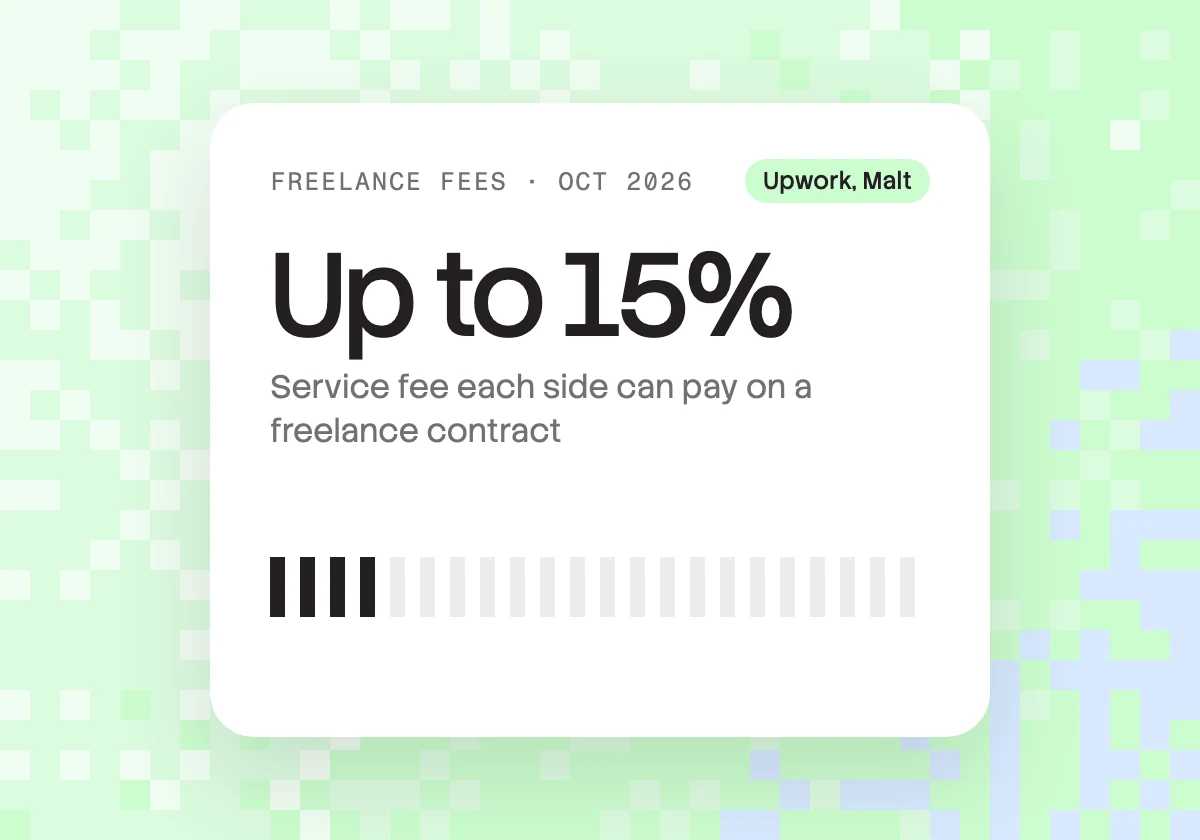
The best talent marketplace for an IT consultancy depends on the consultant you need: an independent freelancer, a senior strategy expert, or a consultant employed by another firm. Freelance platforms (Upwork, Toptal, Malt) give access to independents and charge a service fee, up to 15% per side on Upwork and Malt when we checked in October 2026. Expert networks (Malt Strategy, formerly Comatch, and Catalant) supply independent consultants for strategy and transformation work. Directories and professional networks (Clutch, LinkedIn) help clients and partners find you, and peer networks (BenchBee) let consultancies share employed consultants with no commission. BenchBee wrote this list and is in it.
How we chose and how to read this list
This list is written by BenchBee, which is one of the eight platforms in it. To keep it fair, every entry has the same five lines: what it is, who supplies the talent, how it charges (only what the platform publishes itself), what it is best for, and its limit for an IT consultancy, BenchBee included.
Every platform was checked on its own website on 25 October 2026. Fees and models change, so the list is reviewed every quarter, and the date at the top changes only when something in it does. The order follows the four kinds of marketplace below. It is not a ranking, and there are no scores.
What are the four kinds of talent marketplace?
Freelance platforms. Open marketplaces where independent professionals sell their own time. The platform handles search, contracts and payment, and takes a service fee from the freelancer, the client or both.
Expert networks. Curated networks of independent senior consultants, often former strategy-firm staff, matched to a client's project by the network's own team. Pricing is usually agreed per project.
Directories and professional networks. Places to be found rather than to staff. A directory such as Clutch helps clients choose a provider; a professional network such as LinkedIn helps people find each other. Neither supplies a consultant for a project.
Peer networks. Networks where consultancies share consultants they employ. One firm has a consultant between projects, another has a role to fill, and the two firms agree the deal directly.
The four kinds differ most on one question: is the consultant an independent, or an employee of another firm? That decides who stands behind the work, who carries the risk if it goes wrong, and how the contract is written.

The list
Upwork
- What it is: a global freelance marketplace for short tasks and longer contracts, across development, data, design and business work.
- Who supplies the talent: independent freelancers, and agencies that list their teams.
- How it charges: the freelancer pays a service fee of 0 to 15% per contract, shown before the proposal is sent. On the free Basic plan, the client pays a marketplace fee of up to 7.99% on every payment, and more on the Business Plus plan.
- Best for: a well-defined piece of work you can hand to one person quickly. A consultancy can also list itself as an agency.
- Limit: the pool is wide, so the quality check is yours. A consultancy listed as an agency appears in the same search as individual freelancers from every country.
Toptal
- What it is: a network of freelance developers, designers, data and AI experts, project managers and management consultants.
- Who supplies the talent: freelancers who apply and pass Toptal's screening. Toptal says about 3% of applicants pass.
- How it charges: a $79 monthly subscription if you go ahead with matching. Each engagement starts with a trial of up to two weeks, and you are not billed if you are not satisfied. Engagements run hourly, part time or full time; Toptal does not publish its share of the rate.
- Best for: a screened senior individual within days, when you would hire a freelancer anyway.
- Limit: the talent are individual freelancers, so it helps a consultancy buy capacity, not place its own employed consultants.
Malt
- What it is: a freelance platform active across Europe and the Middle East, with invoicing, payment and insurance built in.
- Who supplies the talent: independent freelancers.
- How it charges: both sides pay. Freelancers pay 5%, or 10% on some projects in France, Spain and Belgium, falling to 5% after six months. Malt's help centre lists client plans at 10% (Starter) and 15% (Advanced), with Enterprise priced to order; the UK pricing page quotes plans on demand.
- Best for: hiring a freelancer in Europe with the paperwork handled by the platform.
- Limit: freelancers only, and a fee on both sides of each contract.
Comatch (now Malt Strategy)
- What it is: Comatch no longer operates under its own name. Malt bought it in March 2022, and comatch.com now leads to Malt Strategy, which Malt describes as an exclusive community of management consultants and interim executives, with a matching service.
- Who supplies the talent: independent management consultants and interim managers. Malt gives a figure of over 15,000.
- How it charges: Malt Strategy is included in every Malt plan, with customised pricing for each project.
- Best for: strategy, transformation and interim management, including IT strategy and interim CIO or CTO roles.
- Limit: built for management consulting and interim roles, not for staffing hands-on IT delivery, and its consultants are independents.
Catalant
- What it is: Catalant's website now presents it as a consulting provider, "Consulting 2.0", that assembles teams of experts for a client's challenge, rather than as a self-serve marketplace.
- Who supplies the talent: a community of consulting-firm alumni and former Fortune 500 operators. Catalant gives a figure of over 40,000 active consultants.
- How it charges: no public pricing. Engagements start with a conversation with Catalant.
- Best for: large companies and private equity firms buying strategy, M&A, transformation and AI work.
- Limit: for an IT consultancy, Catalant is closer to another consulting provider than to a source of consultants or a place to list a bench.
- What it is: the professional network, used here as a channel: posts, messages, search, job posts and Service Pages.
- Who supplies the talent: individuals, through their own profiles. Firms appear through their Company Pages.
- How it charges: Service Pages are free for freelancers and small businesses. LinkedIn Recruiter is priced to the organisation (seats and company size), with no public price on its product page.
- Best for: reaching the firms and people you already know, and telling them a consultant is free.
- Limit: LinkedIn is built around individual profiles and hiring. A Service Page says what a firm offers, not which consultant is free next month, and it does not verify who is available.
Clutch
- What it is: a directory of B2B service providers, with client reviews and portfolios, used by buyers to choose an agency or a consultancy.
- Who supplies the talent: service firms list themselves. Clutch does not supply consultants.
- How it charges: a free Basic profile, a Verified profile at $499 a year, and advertising at custom prices.
- Best for: being found by clients who are choosing an IT services provider, and building credibility with reviews.
- Limit: it helps you win projects, not staff them, and it has no way to place or borrow a consultant. More in BenchBee vs Clutch.
BenchBee
- What it is: a private network where IT consultancies share talent. Consultancies list the consultants they employ who are between projects and post the roles they need filled; IT recruitment agencies post jobs.
- Who supplies the talent: verified IT consultancies in the UK, Europe and the GCC, each checked against Companies House or the local registry and welcomed with an onboarding call. The consultants are their permanent employees.
- How it charges: free until 3 accepted matches, then a monthly membership (pricing for consultancies). No commission on any match; the two firms agree the rate and the contract directly.
- Best for: a consultancy with a consultant to place for a few weeks or months, or a gap to fill with an employed consultant whose firm stands behind them.
- Limit: no freelancers. BenchBee verifies companies, not individuals, so you interview the consultant yourself. It is younger than the other platforms here, so there are fewer profiles to search.
Which platforms specialise in IT consulting talent?
None of the large freelance platforms is IT-only. Upwork, Toptal and Malt cover IT among many other skills; Toptal's categories start with developers and AI experts. The expert networks lean towards management consulting: Malt Strategy and Catalant cover IT strategy and transformation, not day-to-day delivery. Clutch lists IT services firms among many other categories, and LinkedIn covers every profession.
Of the eight, BenchBee is the one built only for IT consultancies, and the only one where the talent is employed by another consultancy rather than independent. How it works: How BenchBee works.
How do marketplaces compare with recruitment agencies?
A recruitment agency finds the person for you and is paid on the result, usually a fee on a permanent hire or a margin on a contractor's day rate. A marketplace gives you access and leaves the choice to you, for a service fee or a subscription. A peer network introduces two consultancies, and the consultant stays on their employer's payroll throughout. Agencies are strong at permanent hiring and at searching beyond any network; peer networks at short-term capacity between firms. The full comparison is in BenchBee vs recruitment agencies.
How to choose
Three questions settle most choices.
- Do you need an independent or an employed consultant? An independent signs their own contract and carries their own risk. An employed consultant comes with their firm, which answers for the work and the replacement if it goes wrong. Freelance platforms and expert networks give you the first; a peer network gives you the second.
- For how long? A few days of work suits a freelance platform. A three to six month project usually needs someone with delivery experience and a firm behind them. A permanent role is a hire, which is an agency's or LinkedIn's job.
- Who carries the risk? Read who signs the contract, who pays whom, and what the platform takes. On a freelance platform the platform is often in the payment chain. On a peer network the two firms contract directly, and the platform is not a party to the deal.
If the question is the other way round, where to place a consultant you already employ, the list gets short: freelance platforms and expert networks take individuals, Clutch and LinkedIn place no one, Upwork accepts a consultancy as an agency, and a peer network is built for it. Why consultancies do this with each other: Why IT consultancies share talent with each other. The criteria to test any platform before you commit: How to evaluate a talent platform. BenchBee for consultancies.
Sources: Checked on each platform's own website on 25 October 2026: Upwork Help Center ("Learn about the Freelancer Service Fee", "What is the Client Marketplace Fee?") and upwork.com/agencies; toptal.com and toptal.com/faq; Malt help centre ("What are Malt service fees and offers?", "How do the Malt service fees work for freelancers?"), malt.com pricing and Malt Strategy pages; comatch.com (redirects to Malt Strategy); catalant.com; LinkedIn Help (Service Pages FAQ) and LinkedIn Recruiter product page; clutch.co/get-listed. Malt's purchase of Comatch: Siècle Digital, 28 March 2022. Consultant counts and screening rates are each platform's own figures.