Why IT consultancies share talent with each other
What a firm gains from lending and borrowing consultants, how it works between two companies, and where the WhatsApp group stops.
The bench economyPublished on 8 min read
IT consultancies share talent because one firm's bench is often another firm's missing profile, in the same month. Lending a benched consultant turns days the firm pays for anyway into billed days. Borrowing one fills a role for the length of a project, instead of a hiring search: in the UK, IT vacancies took about 42 days on average to fill (Adzuna, July 2026). The consultant stays employed by their own firm, and the two firms agree the rate and the contract directly.
One firm's bench is another firm's gap
Projects come in waves. Headcount doesn't. So every IT consultancy is overstaffed on one skill and short on another, rarely at the same time as its peers.
Take two firms of the same size. Consultancy A has just finished a data platform rollout, and two Power BI developers are on the bench. Consultancy B has won a reporting project that starts in a fortnight and has nobody free who knows Power BI. A pays two salaries with nothing to invoice; B is about to turn the work down. Neither knows about the other.

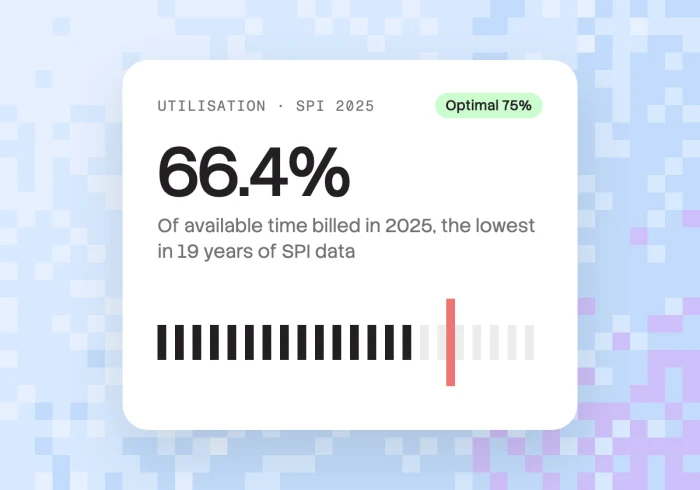
Billable utilisation in professional services firms, IT consultancies among them, fell to 66.4% in 2025, the lowest in SPI Research's survey history and well below the 75% SPI considers optimal (SPI Research, 509 firms, published 2026). Much of that gap is consultants paid and not billed while other firms are short of exactly their skills. Talent sharing closes it from both sides: A lends, B borrows.
What a consultancy gains from lending
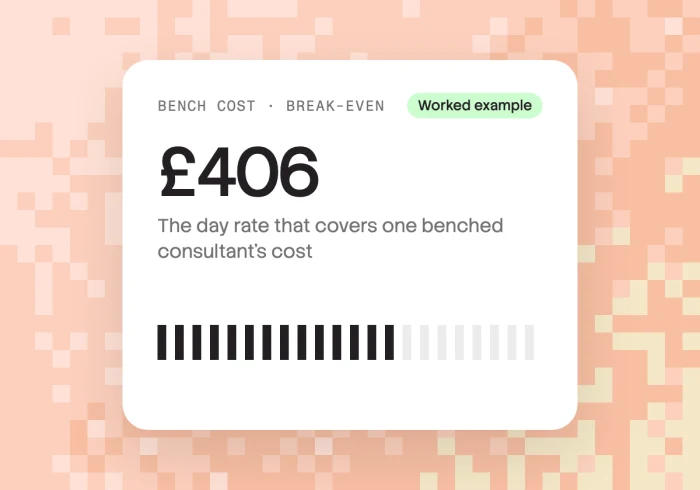
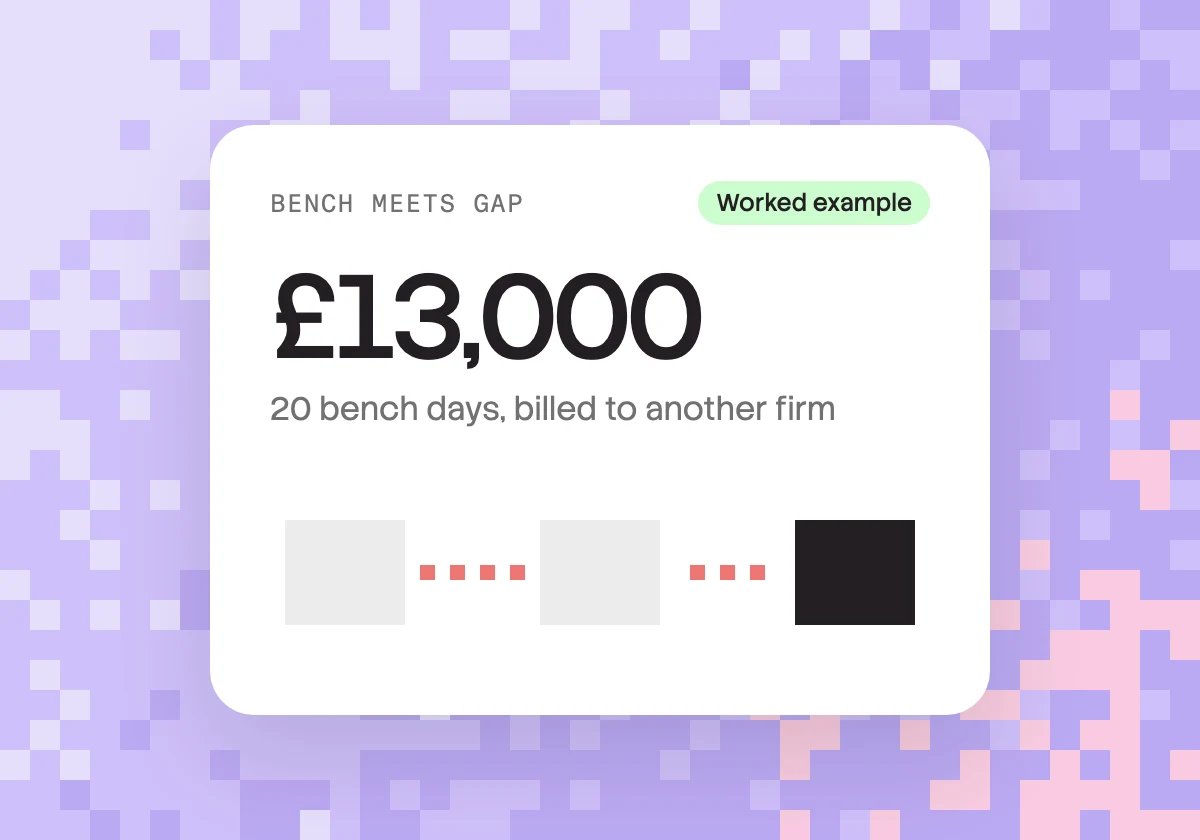
Billed days instead of paid days. Take the worked example used across this blog: a consultant on a £65,000 salary costs the firm about £89,250 a year once employer National Insurance, pension, benefits and overhead are added, or about £406 per available working day. Twenty days on the bench cost about £8,100, with nothing invoiced. Lent to another firm for those 20 days at £650 a day, the consultant bills £13,000, about £4,900 above cost. Any day rate above about £406 covers the cost. The full calculation: What bench time really costs an IT consultancy.
Worked example, illustrative: £65,000 salary, £89,250 loaded cost over 220 working days.
A consultant who stays sharp, and stays. A month of internal tasks is a month of skills going stale, and a long bench is a common reason to start looking elsewhere. A real project keeps them billing and busy.
Your people and your clients stay yours. The consultant stays your employee, on your payroll. You set the day rate, and your clients stay yours.
A peer who can return the favour. The firm that borrows your consultant this quarter may have the profile you need next quarter.
What a consultancy gains from borrowing
A consultant who can start, not a search that starts. A borrowed consultant is already employed and listed as available. In the UK, IT vacancies took about 42 days on average to fill (Adzuna, UK Job Market Report, July 2026), before any notice period. Borrowing replaces the search with one conversation between two firms.
A skill for the length of the project. A six-month project does not need a permanent hire, and headcount added for a peak ends up on your own bench.
A supplier, not a stranger. The consultant comes with an employer who knows their work and stays responsible for them. How to check a consultant before you take one: How to vet a consultant before taking one from another firm.
How does talent sharing work between two firms?
On BenchBee, a private network of verified IT consultancies in the UK, Europe and the GCC, it takes five steps.
- List or post. The lending firm lists its consultants between projects; the borrowing firm posts the role it can't staff. A listing shows the profile only (skills, seniority, availability), no consultant name and no firm name. Step by step: How to list your benched consultants on BenchBee.
- Send a match request. Either firm can send one when a profile fits a role. Sending a request reveals the sender to that firm only; the rest of the network sees nothing.
- Accept. When the other firm accepts, both companies are revealed to each other and a chat opens in the app, with the history kept for both firms.
- Interview. The two firms arrange the interview between themselves.
- Agree terms directly. The two firms agree the day rate and sign the contract on their own paper. The consultant stays on the lending firm's payroll, and the lending firm invoices the borrowing firm for the days worked. BenchBee takes no commission and is not a party to the contract.
What that contract should cover: After the match: contracts, NDAs and payments stay between the two firms. The full product walk-through: How it works.
"They're my competitors."
It is the first objection, and a fair one.
Most peers are not your competitors on a given account. A firm in another sector, region or technology is not bidding against you. Decide where your line sits: a firm in the same accounts or the same clearance work, decline; a firm in an adjacent field, accept.
You choose who sees you. On BenchBee, your listings never show your firm's name or your consultants' names, and nobody sees your bench size. Another firm learns who you are only when you send it a request or accept one of its requests. Nobody can contact your consultants directly: requests come to the company.
Your contract covers the rest. Non-solicitation and confidentiality terms are agreed in your own contract with the other firm, as with any subcontractor.
The limits of the WhatsApp group
Most consultancy leaders already share talent, in WhatsApp groups, Slack channels and calls to four or five trusted peers: "Anyone free on Power BI for the next three months?" The instinct is right. The method has four limits.
- Reach. The group stops at who you already know. The profile you need is more likely to sit at a firm you have never met.
- Timing. A message scrolls away within the hour, and a consultant free next week was never in the thread.
- Privacy. Posting your bench in a group tells every member, by name, who you cannot keep busy.
- Record. Nothing tracks who asked, what was agreed or what happened next.
How do you reach talent outside your own network? Ask each trusted peer to introduce you to one firm they trust; use the partner communities of the software vendors you deliver for; or join a verified network where firms you have never met list their available consultants and open roles.
BenchBee is built on the same instinct as the WhatsApp group, without the limit of one phone's contact list.
Which platforms connect IT consultancies for resource sharing?
Few platforms are built for one consultancy to lend its own employees to another; most connect companies with independent professionals. The main kinds, with examples checked on each company's own site in October 2026:
- Consultancy-to-consultancy networks. BenchBee is a private network of verified IT consultancies in the UK, Europe and the GCC. Firms list their available consultants and post the roles they can't staff, and IT recruitment agencies post their clients' jobs. The consultant stays employed by their firm, the two firms deal directly, and there is no commission. Pricing for consultancies.
- Freelance marketplaces, such as Upwork and Malt, connect companies with independent freelancers. They suit hiring an individual, not lending your own employees.
- Consulting talent networks, such as Malt Strategy (formerly Comatch) and Catalant, supply independent consultants and former consulting-firm staff, mostly for strategy and transformation work.
- Resource-planning software plans your own people's time. It shows your bench; it does not connect you with other firms.
A platform-by-platform comparison: The best talent marketplaces for IT consultancies.
What is the best way to monetise benched consultants?
Lend them, at a day rate, to a firm that needs their skills: it is the only option that bills the day. The options, from the most revenue to the least:
- Lend them to a peer consultancy, or for an IT recruitment agency's role. Billed at an agreed day rate; anything above the daily cost (about £406 in the worked example) is margin.
- Put them on an existing client's work at a lower rate. Covers part of the cost, and can set a price the client remembers.
- Pre-sales and bid support. Unbilled, but it can win the next project.
- Internal projects and training. Unbilled; keeps skills current.
More ways to cut the cost of the bench: How to reduce consultant bench time costs.
Sources: Adzuna, UK Job Market Report, 31 July 2026. SPI Research, 2026 Professional Services Maturity Benchmark (509 firms), as reported by Deltek, 30 July 2026. Upwork, Malt, Malt Strategy and Catalant, own websites, checked 25 October 2026. The salary, day rate and overhead figures are an illustrative example, not a benchmark.